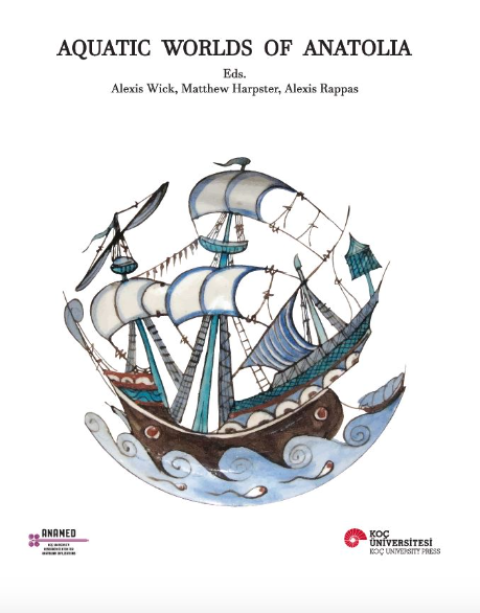
148 pp, pb, color figures, in English.
In placing Anatolia at the center of inquiry, this volume offers a distinct contribution to wider conversations on environmental history, the technopolitics of infrastructure, and the spatial humanities. By charting the deep and varied histories of aquatic life-worlds, it seeks to situate water not as a universal medium, but as a regionally embedded substance, always shaped by—and shaping—the particular terrains, temporalities, and tensions of a particular place. This volume brings together researchers engaged in the study of the Anatolian past from an aquatic perspective, placing at the center of the analytical frame the many seas, rivers, lakes, and wetlands, which make up the space but remain too often overlooked in the writing of its history. Indeed, the very idea of Anatolia tends to be associated with land and its many attributes—the figure of the peasant, the pure language, the ideal village, the terroir, the national territory, etc. In fact, many of these symbols connote places even deeper inland in central Asia, farther and farther away from the aquatic landscapes—sometimes veritable seascapes and riverscapes—that define Anatolia intimately. In contrast to this conventional view, we propose that Anatolia’s particular space, probably more than most geographical units, has been profoundly marked, indeed forever scarred, by the aquatic element: water delineates its perimeter and constitutes its body.